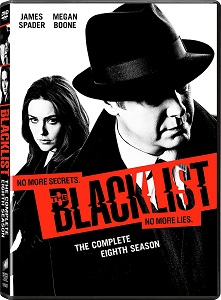
THE BLACKLIST SEASON EIGHT
CONTEST
A
criminal ex-businessman who is on the Most Wanted list at a number of
law enforcement agencies, and who has eluded arrest for two decades,
finally decides to turn himself in and reveal how he has managed to
strategically avoid being captured for so long. But the only condition
is that he insists on getting to choose who he will speak to about
everything the authorities want to know. A new FBI agent named Elizabeth
Keen is who he decides to tell his story to, and her life ends up taking
many twists and turns while dealing with the mysterious fugitive.
Following the startling revelation that
Raymond "Red" Reddington (James Spader) isn't who he says he is,
Elizabeth Keen (Megan Boone) is torn between the relationship she's
developed with the man claiming to be her father and her desire to get
to the bottom of years of secrets and lies. Meanwhile, Red leads Liz and
the FBI to the most strange and dangerous criminals yet, growing his
empire and eliminating rivals in the process. All throughout, Liz and
Red engage in an uneasy cat-and-mouse game in which lines will be
crossed and the truth will be revealed.